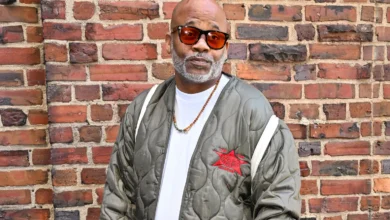

A$AP Rocky is facing criticism on social media after fans accused him of plagiarizing another video for his latest music visual, “Shroom Clouds.” The controversy emerged just days after the rapper released the video for the song, which features reggie and Jeremih, on October 19. Online discussions quickly shifted from the video’s surreal visuals to questions about its creative origins and the use of artificial intelligence in its production. The official credits list multiple directors and production companies, alongside artists specifically credited for AI work, prompting debate about how much of the finished visual relied on generative technology. Although the plagiarism allegations have attracted attention, they remain unverified claims rather than an established finding of copyright infringement.
The accusations began circulating on Reddit over the weekend, with users questioning whether elements of the “Shroom Clouds” video closely resembled an existing visual created by someone else. The discussion gained momentum as fans examined the video’s imagery and considered whether the similarities went beyond shared artistic influences. However, the available information does not establish that A$AP Rocky or his collaborators copied another creator’s work. Determining whether a video constitutes plagiarism requires more than pointing out similarities, particularly when music videos can draw from common visual styles, editing techniques and surreal effects. Without clear evidence identifying the original work and demonstrating how it was used, the allegations should be treated with caution.
The controversy has also brought renewed attention to the official credits for the “Shroom Clouds” music video. The visual credits A$AP Rocky alongside directors Aisulton Seitov and Pietro Biz Biasia, with North of Now and Partizan listed as production companies. It also names “Spike and Red” and “Ces” under the AI artist credits, making the use of artificial intelligence an explicit part of the production discussion. Those credits have raised questions among viewers about the division of creative work between human artists and AI tools. Some fans have expressed disappointment that a video associated with Rocky’s distinctive artistic vision includes AI-generated elements. Others have argued that the presence of AI credits does not establish that the entire video was generated by artificial intelligence or that its creators copied another person’s work.
For critics, the main issue extends beyond the plagiarism allegations to the broader debate about AI in music videos. A$AP Rocky has developed a reputation for ambitious visuals, unusual styling and experimental creative choices throughout his career. Fans who value those qualities may expect his videos to demonstrate the work of cinematographers, designers, animators and other human collaborators. When artificial intelligence becomes part of the creative process, some viewers worry that it could replace artists or reduce the originality of a finished production. The reaction to “Shroom Clouds” reflects those concerns, particularly among people who believe the use of AI can undermine an otherwise carefully developed visual concept. Still, the video’s credits alone do not reveal precisely which elements were generated with AI, how the tools were used or how much human work went into the final result.
One social media commenter captured that frustration by arguing that Rocky has a clear creative vision, collaborates with interesting people and puts substantial effort into his projects. The user suggested that even a limited amount of AI could damage the overall effect, particularly when the artificial imagery was already receiving criticism. That response highlights an important distinction between the technical quality of a production and the audience’s perception of its creative methods. A visually ambitious music video can still face backlash if viewers believe its production choices conflict with the values they associate with the artist. In Rocky’s case, the criticism appears to be driven partly by expectations surrounding his artistic identity and partly by growing skepticism toward generative AI. The debate therefore involves more than whether the video looks convincing, as it also concerns originality, transparency and the role of human creativity.
The timing of the controversy has added another layer to the discussion because Rocky recently spoke about his approach to music production and artificial intelligence. In an interview published by Complex shortly before the video’s release, he discussed his preference for working practically with musicians and producers. He also acknowledged that fully prompted AI work belongs to a developing creative space, questioning who should decide what methods are acceptable or standard. Some fans have interpreted those comments as inconsistent with the AI credits attached to “Shroom Clouds.” Others see no necessary contradiction, since supporting practical collaboration does not automatically mean rejecting every use of artificial intelligence. Without a more detailed explanation of how the video was made, it is difficult to determine whether the credits conflict with Rocky’s stated preferences or simply reflect a different aspect of his creative process.
The debate also raises broader questions about what counts as plagiarism in the age of AI-generated media. Generative tools can produce imagery influenced by patterns learned from existing material, but that fact alone does not prove that a particular video unlawfully copies a specific work. A meaningful assessment would require identifying the alleged original video, comparing the relevant elements and examining whether protected creative expression was reproduced. It would also be important to understand the role of the credited artists and the production team in developing the final visual. At present, no verified public response from the alleged original creator or an official statement from Rocky’s representatives has established what happened. Until further evidence becomes available, claims that the video was plagiarized should remain allegations rather than be presented as confirmed facts.
Despite the controversy, “Shroom Clouds” remains part of the rollout for A$AP Rocky’s Don’t Be Dumb Disc 2 material. The song features reggie and Jeremih, combining Rocky’s latest musical direction with a visual release that was intended to attract attention through its unusual presentation. Before the plagiarism discussion gained traction, some viewers had also speculated about a possible deluxe release after noticing a prop marked “30 OCT 2026” in the video. That detail prompted theories about a potential release date, although the prop alone does not confirm that a deluxe edition is scheduled. The ongoing discussion illustrates how details within a music video can generate interest beyond the song itself, especially when fans are looking for clues about an artist’s next move. However, the current controversy has shifted much of the conversation away from the music and toward questions about production methods and creative ownership.
For A$AP Rocky, the response to “Shroom Clouds” presents a challenge because his reputation is closely linked to visual experimentation and unconventional artistic choices. The same ambition that encourages fans to pay attention to his videos can also lead to sharper criticism when a production decision disappoints them. The use of AI has become a particularly sensitive issue across music, film, advertising and visual art, with audiences debating whether the technology should serve as a creative tool or be avoided in favor of traditional methods. Artists and production teams must also consider how clearly they communicate their use of these tools, especially when their audience places a high value on originality. In this case, clearer information about the video’s production could help address some concerns, although it would not automatically resolve the separate plagiarism allegations. Any meaningful conclusion will depend on evidence and further clarification rather than speculation across social media.
The backlash surrounding A$AP Rocky’s “Shroom Clouds” music video highlights the growing tension between artistic experimentation, artificial intelligence and expectations of originality. The video’s AI artist credits have sparked criticism, while online allegations of plagiarism have raised questions that remain unanswered. There is currently no verified basis to treat those accusations as proven copyright infringement, and the extent of AI’s contribution to the visual remains unclear. Rocky’s earlier comments about practical creative work have intensified the debate, but they do not establish that he misrepresented the video’s production. Until the artist, his representatives or the people involved provide further clarification, the controversy remains an ongoing online dispute. For now, “Shroom Clouds” has become part of a wider conversation about how artists can use emerging technology while maintaining the originality and creative trust that audiences expect.