Oschino Accuses Jay-Z of Stealing Rap Lyrics, Claims Hov May Have Taken More Lines Than Any Other Rapper
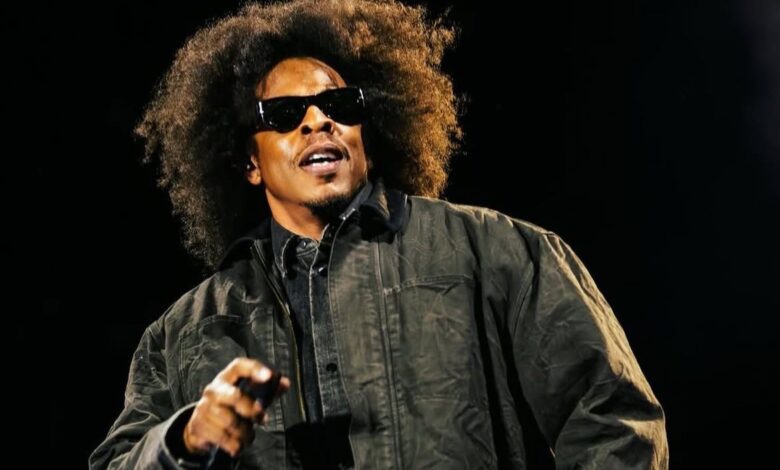
Jay-Z is widely regarded as one of the greatest rappers in hip-hop history, but his reputation has never been free from criticism. Former State Property member Oschino has reignited conversations about the rapper’s songwriting methods, accusing him of taking lyrics, beats and hooks from other artists throughout his career. During a recent interview with Quiet Part Out Loud, Oschino made the bold claim that Jay-Z may have stolen more rap lyrics than any other rapper. While acknowledging Hov’s ability to create successful music independently, he argued that the legendary MC has also benefited from borrowing other people’s ideas and reworking them into commercially successful records. His comments have added another layer to the ongoing tension between the two former Roc-A-Fella associates. The accusations have also sparked renewed interest in the long-running debate surrounding originality, songwriting and influence in hip-hop.
Oschino did not hold back when discussing what he believes Jay-Z has done throughout his career. During the interview, he alleged that Hov sometimes takes another artist’s instrumental, hook or lyrical ideas before releasing a version that appears to be his own creation. He acknowledged that Jay-Z has made some of the most successful music in rap without needing assistance from other artists. However, Oschino argued that this does not change his opinion about the rapper’s alleged history of borrowing material. He went as far as suggesting that Jay-Z might have taken more lines from other rappers than anyone else in the genre. These are Oschino’s personal allegations and have not been established as fact.
One of the most interesting aspects of Oschino’s comments was his reference to Cam’ron’s song “I’m Not A Writer, I’m A Biter.” He brought up the track as an example of the criticism that has surrounded Jay-Z’s approach to songwriting. According to Oschino, Hov has a habit of taking another person’s material, changing its structure or wording and making the finished version sound better. He also suggested that Jay-Z does not always acknowledge the influence behind those creative decisions. The accusation raises familiar questions about the boundaries between inspiration, interpolation and plagiarism in rap music. Hip-hop has always involved artists borrowing from one another, but disagreements emerge when questions about credit and ownership become part of the conversation.
Cam’ron’s reference is particularly notable because the Harlem rapper has had his own complicated history with Jay-Z. Both artists have been influential figures in New York hip-hop, and their relationship has experienced periods of tension and public criticism. Cam’ron’s music has occasionally addressed the wider culture of lyrical competition and the accusations that established rappers borrow from less prominent artists. His song “I’m Not A Writer, I’m A Biter” fits into that broader conversation. Oschino’s decision to mention the track suggests that he sees the accusations against Jay-Z as part of a longer-running discussion rather than an isolated disagreement. However, the existence of the song does not independently prove the claims Oschino has made.
These latest comments also continue a series of public criticisms Oschino has directed toward Jay-Z during the recent JAŸ30 celebrations. The former State Property rapper has used several interviews to discuss his disagreements with Hov, including his views on the legendary rapper’s career and influence. Oschino has also expressed criticism of how certain figures have received recognition for their contributions to hip-hop history. His remarks have attracted attention because he was once connected to the Roc-A-Fella environment that helped establish Jay-Z as a major industry figure. That background gives his comments an additional dimension, although it does not automatically make every allegation accurate. Their former professional association has made the public disagreement particularly interesting to longtime fans of the label.
Jay-Z has also seemingly responded to Oschino during a recent Roots Picnic performance. During a freestyle, Hov delivered a line about someone he described as a stuttering, talkative individual who was struggling financially. The lyrics were widely interpreted as a possible reference to Oschino because of the timing and the ongoing public disagreement. However, Jay-Z did not explicitly identify Oschino in the reported lyric. The apparent response attracted attention because it suggested that the criticism had reached the Brooklyn rapper. For fans following the situation, the moment added another chapter to an increasingly public disagreement between the two hip-hop figures.
Oschino did not limit his response to interviews and social media discussions. He also used music to address the situation, delivering a freestyle over Drake’s “Make Them Pay.” During the performance, he directed criticism toward Jay-Z and responded to what he viewed as Hov’s earlier comments about him. The freestyle gave Oschino an opportunity to present his side through rap rather than relying entirely on interviews. This approach also connects the disagreement to one of hip-hop’s oldest traditions, where artists use diss records and competitive lyricism to challenge their rivals. Although the exchange has not developed into a full-scale rap feud, the public back-and-forth has kept both artists’ names in the conversation.
The disagreement is also interesting because of Jay-Z’s longstanding reputation as an elite lyricist. Throughout his career, Hov has received praise for his wordplay, storytelling, delivery and ability to construct memorable verses. Albums such as Reasonable Doubt, The Blueprint and The Black Album helped establish his position among hip-hop’s most respected artists. His influence extends beyond music, with his business ventures and work through Roc Nation making him one of the industry’s most powerful figures. However, success at that level often attracts greater scrutiny over artistic decisions and creative ownership. Oschino’s allegations challenge part of the mythology surrounding Jay-Z’s songwriting, even though they remain disputed claims rather than proven conclusions.
The discussion also highlights an important distinction within hip-hop between borrowing inspiration and taking another artist’s work without proper recognition. Rap music has a long tradition of sampling, interpolation, reference tracks and lyrical influences. Producers regularly transform older recordings into new compositions, while rappers sometimes reinterpret familiar phrases or incorporate references to other artists. These practices can be accepted as creative expression when artists respect the relevant rights and acknowledge contributions where appropriate. Problems arise when someone claims ownership of material that another person created or when disagreements emerge over songwriting credits. Oschino’s comments place Jay-Z at the center of that debate, but evaluating the allegations would require specific examples and supporting evidence.
With the Super Bowl Halftime Show approaching in February, Jay-Z is likely to remain a major subject of entertainment and hip-hop discussion. His involvement with Roc Nation’s partnership with the NFL has already made him an influential figure in shaping the halftime show’s musical direction. As one of the most recognizable names in rap, his public appearances and professional decisions regularly attract attention. The ongoing disagreement with Oschino could therefore continue generating headlines, particularly if either artist decides to address the situation again. Whether Jay-Z responds directly to the latest allegations remains uncertain. For now, Oschino appears willing to continue speaking about his experiences and frustrations with his former label head.
Oschino’s latest accusations have reopened an interesting conversation about Jay-Z’s songwriting, originality and place in hip-hop history. His suggestion that Hov may have taken more lyrics than any other rapper is a major claim, particularly considering the legendary status Jay-Z has built over several decades. By referencing Cam’ron’s “I’m Not A Writer, I’m A Biter” and discussing alleged instances of borrowed beats, hooks and lyrics, Oschino has given the criticism a wider historical context. His comments also come amid an increasingly public disagreement that has included interviews, a possible lyrical response from Jay-Z and a freestyle from Oschino. However, it is important to distinguish personal accusations from verified evidence when discussing an artist’s creative history. Whether this situation develops into a bigger hip-hop feud or eventually fades away, the debate surrounding Jay-Z’s songwriting and Oschino’s criticism is likely to keep fans talking.