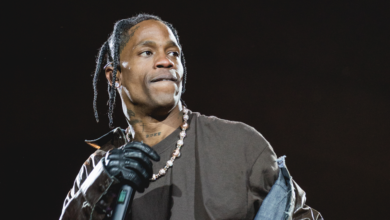
Tyga’s $TARFACE Faces AI Allegations as Fans Debate the Album’s Creative Process
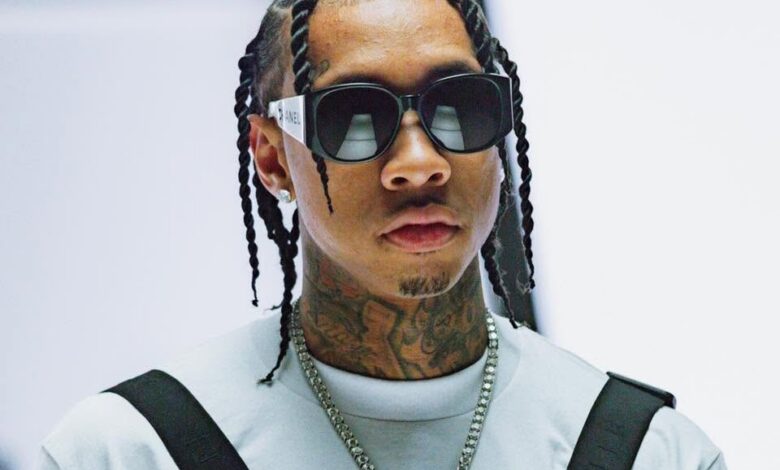
Tyga’s latest album, $TARFACE, has become one of the most talked-about hip-hop releases of 2026. The project introduced a bold new artistic direction that embraced an unmistakable 1980s-inspired sound and visual identity, marking a significant departure from the rapper’s previous work. Fans praised the album for its retro influences, polished production and willingness to experiment with a fresh musical style. However, alongside the positive reactions, a growing controversy has emerged over claims that artificial intelligence may have played a role in the creation of the album. While these allegations have generated widespread discussion online, no official evidence has been presented to confirm the claims.
From the moment $TARFACE was announced, Tyga made it clear that he was entering a new creative era. The album was accompanied by a distinctive persona that reflected classic science fiction aesthetics and vintage pop culture influences from the 1980s. This transformation extended beyond the music, shaping the project’s artwork, promotional campaigns and overall presentation. Many listeners welcomed the change, describing it as one of the rapper’s most ambitious releases to date. The willingness to reinvent himself earned Tyga praise from fans who appreciated artists taking creative risks.
Despite the excitement surrounding the album, discussions quickly shifted toward the possibility that artificial intelligence had been used during its production. Some listeners questioned the polished vocal effects and unique production style, while others speculated that AI tools may have assisted in generating parts of the music. These conversations remained largely speculative until music producer Medasin publicly shared his own allegations on social media. His comments significantly increased attention on the issue and reignited broader debates about AI’s growing influence within the music industry.
Medasin claimed that Tyga and his team may have relied on artificial intelligence software while creating $TARFACE. His allegations were based on his own investigation using an AI detection model rather than official documentation or confirmation from those involved with the project. According to Medasin, he analyzed the song “AFFECTION” using an AI detection system connected to an Instagram account known as @humanstandard_. He stated that the detection model classified the track as “likely AI” generated through a platform called Treblo. While the results fueled online speculation, they have not been independently verified or accepted as conclusive proof.
The AI detection model cited by Medasin reportedly identifies music that may have been created using generative AI systems such as Treblo, Suno and Udio. According to his explanation, users can submit songs through direct messages, after which the system analyzes the audio for characteristics associated with AI-generated music. Medasin argued that these technologies are becoming increasingly sophisticated and that detection methods are improving alongside them. He suggested that artists who rely on artificial intelligence without disclosing its use may eventually face credibility issues as detection tools continue to advance. However, experts generally caution that AI detection technology is still evolving and should not be treated as definitive evidence without additional verification.
Another aspect of Medasin’s argument involved the music company EMPIRE, which distributed $TARFACE. He noted that EMPIRE also handled the release of “RUBBERZ,” a viral song by Fenix Flexin that has previously been the subject of AI-related allegations. Medasin questioned whether there could be a financial or business connection involving EMPIRE and AI music platforms such as Treblo. At this stage, however, he has not presented publicly verified evidence demonstrating any such relationship. As a result, these claims remain speculative rather than established facts.
The mention of Fenix Flexin also attracted attention because Medasin was previously involved in raising questions about the origins of “RUBBERZ.” That earlier controversy introduced many music fans to the growing debate surrounding AI-generated songs and how they should be identified. Since then, discussions about artificial intelligence have become increasingly common across the music industry, particularly as generative technology continues to improve. Artists, producers and listeners remain divided on whether AI should be viewed as a creative tool or as something that threatens traditional musicianship. The allegations surrounding $TARFACE have become another chapter in that ongoing conversation.
As of now, Tyga and his representatives have not publicly responded to the accusations. Their silence has allowed speculation to continue across social media platforms, where fans remain divided over the issue. Some listeners believe the claims deserve further investigation, while others argue that artistic experimentation should not automatically be interpreted as evidence of AI involvement. Without an official statement or independently verified technical analysis, it remains impossible to determine whether artificial intelligence played any role in the album’s creation. The absence of confirmation means that the allegations should be treated with caution.
Regardless of the controversy, songs from $TARFACE continue to gain popularity among listeners. Tracks such as “GAVE U RACKS” have attracted attention for their energetic production and nostalgic influences, helping maintain interest in the album despite the ongoing debate. Many fans continue to focus on the music itself rather than the surrounding speculation. Others are waiting to hear whether Tyga eventually addresses the allegations directly. Until then, the conversation remains centered on unanswered questions rather than verified facts.
The controversy surrounding $TARFACE reflects a much larger discussion taking place throughout the music industry. As artificial intelligence becomes more capable of producing convincing music, questions about transparency, creativity and authenticity are becoming increasingly important. Tyga’s latest project has found itself at the center of that debate, even though no conclusive evidence has been presented to support the AI allegations. Whether the claims are eventually proven, disproven or simply fade away, they have already highlighted the challenges artists will face as AI technology becomes more common. For now, $TARFACE stands as both an ambitious artistic reinvention and one of the most closely scrutinized hip-hop albums of 2026.