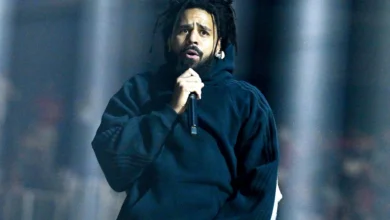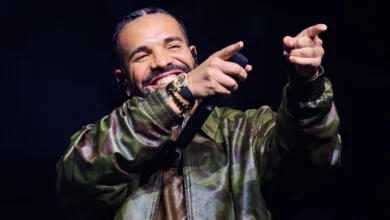
Jim Jones Reflects on Passing Up Early Opportunities With Drake and J. Cole
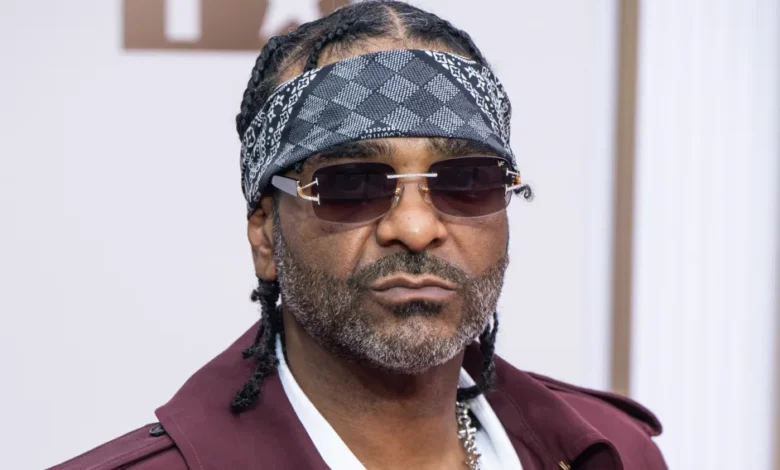
Few missed opportunities in hip-hop can look as significant in hindsight as passing on artists who later become global superstars. Jim Jones recently revisited two decisions that continue to stand out in his career, involving Drake and J. Cole before either rapper had reached the level of success they would eventually achieve. During a recent co-hosting appearance on Mornings With Mero, the Dipset rapper reflected on both situations and acknowledged the financial consequences that became obvious over time. Jones recognized talent in both artists, but he ultimately failed to see how far their careers could go. Looking back now, he summed up those missed opportunities with a blunt admission: “Damn, I f*cked that bag up.”
Drake was the first of the two artists to cross Jones’ path at a time when the Toronto rapper was still establishing himself. Before becoming one of the biggest names in music, Drake was known to many people primarily through his role as Jimmy Brooks on Degrassi: The Next Generation. Jones recalled seeing potential in Drake’s rapping ability, but he struggled to understand how the young Canadian fit into the type of hip-hop image he knew how to market. Drake’s background and presentation were different from what Jones had become accustomed to seeing around his own music career. That disconnect made it difficult for Jones to recognize the commercial potential that would eventually become obvious to much of the music industry.
Drake’s association with Lil Wayne eventually helped change the way Jones viewed him. Once Jones heard Drake working with Wayne, the potential he had initially struggled to place became much clearer. Drake was no longer simply the young rapper who had come from an acting background and seemed difficult to categorize. He was becoming part of a major musical movement around Wayne and Young Money, while developing a style that could connect with audiences well beyond traditional hip-hop boundaries. Jones later acknowledged that he had misjudged the opportunity. The realization became even more significant as Drake went on to build one of the most successful careers in modern music.
J. Cole presented Jones with another opportunity, but the circumstances were somewhat different. Cole was reportedly recording at Jones’ studio while he was signed to Sony, giving Jones a chance to observe the young rapper’s abilities before his career fully took off. Instead of viewing Cole as a separate artist with his own potential, Jones said he saw similarities between Cole and Drake. He recalled telling Cole, “You sound like Drake, and you look like Drake,” before ultimately passing on the opportunity. That comparison shows how strongly Jones’ earlier experience with Drake influenced the way he evaluated Cole. In hindsight, the decision became another example of how an established artist can misread an emerging performer by judging him through the lens of someone who came before.
The irony is that both Drake and Cole eventually established identities that were far more distinctive than those early comparisons suggested. Drake developed a career that moved between hip-hop, R&B, pop and other musical styles while maintaining a highly recognizable approach to songwriting and performance. Cole built his reputation around lyricism, storytelling and album-focused projects while developing a large audience of his own. Their careers ultimately followed very different paths despite Jones initially seeing similarities between them. That makes his decision regarding Cole especially notable when viewed alongside his earlier uncertainty about Drake.
Jones has discussed the Drake situation before, including in an earlier interview in which he explained why Drake’s acting background affected his judgment. At the time, Jones was looking at the person directly in front of him rather than the career that person could potentially build. Drake’s television history made it harder for Jones to imagine him fitting into the hip-hop business model Jones understood. This illustrates one of the challenges of evaluating emerging artists, particularly when their backgrounds do not match familiar industry expectations. An artist’s current image can look very different from the identity they eventually develop.
Jones has also spoken about other artists he believes he could have worked with before they became major stars, including The Weeknd. These stories have become part of the broader discussion surrounding the difficulty of identifying future superstars early in their careers. Record executives, producers, artists and managers make decisions based on incomplete information because no emerging artist comes with a guaranteed outcome. A promising rapper can fail to develop commercially, while an artist who initially seems difficult to understand can eventually become a major cultural force. Jones’ experiences with Drake and Cole demonstrate how quickly the consequences of those judgments can become clear when an artist succeeds on a massive scale.
The financial side of these decisions is naturally one of the biggest reasons Jones continues to bring them up. Drake and J. Cole did not simply achieve moderate success after Jones passed on opportunities to work with them. Both went on to become defining figures of their generation, creating extensive catalogs and building enormous audiences around their music. That level of success makes the hypothetical value of those missed opportunities difficult to ignore. Jones’ comment about “f*cked that bag up” reflects the financial reality he now associates with those decisions, although the exact amount he might have earned cannot be known. The financial loss is therefore a hypothetical calculation rather than a confirmed figure.
There is also a broader lesson in Jones’ reflections about how the music industry evaluates talent. Artists rarely arrive with every characteristic of the superstar they may eventually become. Some need time to develop their sound, image and audience before their potential becomes obvious. Drake’s transition from television actor to global recording artist is a clear example of how an unusual background can complicate early judgments. Cole’s early comparisons to Drake also show how easily a developing artist can be viewed as an imitation rather than an individual with a separate creative identity. Jones’ hindsight highlights how important it can be to evaluate emerging talent on its own potential rather than relying entirely on familiar formulas.
At the same time, Jones’ story does not mean that every promising artist should be treated as a future Drake or J. Cole. The music business is filled with talented performers who never reach that level of success, and predicting which artists will become global stars is inherently difficult. Jones had to make decisions based on the information available to him at the time, not on the careers those artists would eventually create. His comments are valuable because they show how hindsight can change the way people interpret an old decision. What looked uncertain or difficult to understand in the moment can look remarkably obvious after years of success.
Drake and J. Cole ultimately became two of the most prominent rappers of their generation, while Jim Jones continued building his own career as a member of Dipset and as a solo artist. Their paths crossed before either Drake or Cole had reached the heights they would later achieve, creating two moments that Jones can now look back on with a mixture of humor and regret. His comments also reveal how much the music industry can change between the moment an artist is discovered and the moment that artist becomes a superstar. The biggest missed opportunities are often easiest to recognize after the outcome is already known. For Jones, the careers of Drake and J. Cole have ensured that those early decisions remain two of hip-hop’s more memorable what-ifs.