Rapsody’s 15-Year Evolution Shows How Much More There Is To Her Than Great Lyrics
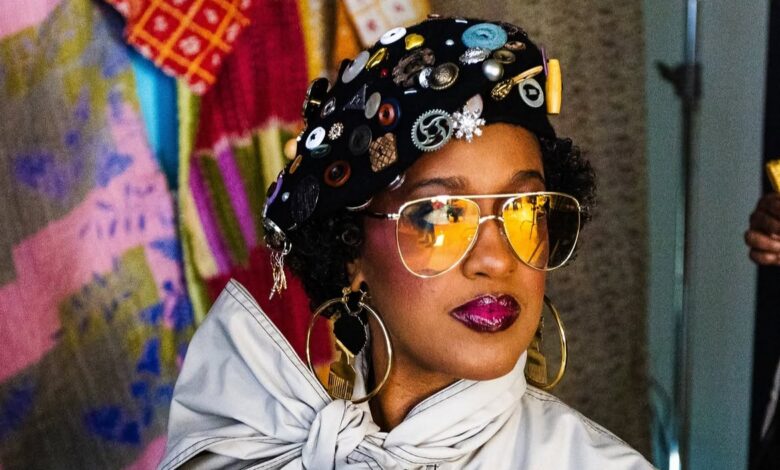
More than 15 years into her career, Rapsody has built a body of work that shows far more than exceptional technical ability. From her early days with Jamla Records to her critically acclaimed albums and increasingly personal songwriting, her music has continually expanded in scope. When Return of the B-Girl arrived in December 2010, she introduced herself as a focused emcee with a strong command of lyricism and a clear respect for Hip Hop’s foundations. Songs such as “1983” immediately established her as an artist who understood the importance of craft, discipline and personal history. Yet listening across her catalog today reveals that the most important part of Rapsody’s development has been how much more of herself she has allowed into the music.
“1983” remains an important starting point because it captures Rapsody before the wider industry recognition arrived. The song appeared as the second track on Return of the B-Girl and used her birth year as a way to introduce listeners to the person behind the emerging rap career. There is ambition throughout the record, but there is also an understanding that becoming a successful artist would require more than talent. She discusses education, preparation and the need to have something to fall back on while making it clear that Hip Hop remains central to her ambitions. Even at this early stage, she demonstrated several qualities that would remain consistent throughout her career, including her respect for Hip Hop history, her attention to detail and her ability to connect personal experiences with broader ideas.
By the time Rapsody released “Believe Me” from The Idea of Beautiful in 2012, her music had begun moving beyond the introduction phase. She was no longer simply telling listeners that she could rap. Instead, she was examining what it meant to pursue a career built around that ability and the uncertainty that came with it. The song carries the confidence of an artist who knows her abilities, but it also acknowledges the difficult experiences that shaped her path. That balance became increasingly important to Rapsody’s songwriting as she learned how to combine ambition with vulnerability. The Idea of Beautiful also strengthened the connection between her lyrics and soulful production, an approach influenced by artists and groups such as The Fugees and Little Brother.
“Kingship,” released on the 2013 mixtape She Got Game, represented another stage in that development. The track placed Rapsody alone over production from DJ Premier, despite the project featuring major names such as Phonte, Jay Electronica, Nipsey Hussle and Raekwon elsewhere on the tracklist. That decision gave the song a different kind of importance because she did not need a high-profile guest to establish her credibility. Instead, the combination of her writing and Premier’s spacious production allowed her to demonstrate exactly how much she could do on her own. The confidence in “Kingship” feels different from the hunger heard on her earliest recordings, suggesting that Rapsody was becoming increasingly comfortable with the position she had earned within Hip Hop.
“Hard To Choose” from 2014’s Beauty and the Beast pushed her perspective further into commentary about the culture around her. Rather than focusing entirely on her own abilities, Rapsody questioned what Hip Hop values and how easily substance can be overlooked when attention often goes to the loudest personalities. Her restrained delivery worked in her favour because she never needed to force the message. The song captured an artist who understood that being quieter did not mean being less powerful. Its place in her catalog is also significant because it arrived before her appearance on Kendrick Lamar’s “Complexion (A Zulu Love),” which introduced her to an even broader audience and reinforced that the perspective she brought to mainstream listeners had already been developing for years.
“Crown,” the title track from her 2016 project, offered another look at Rapsody’s growing confidence. Her partnership with Roc Nation gave her career a larger platform, but the song did not sound like an artist suddenly discovering her worth because a major industry deal had arrived. Instead, the crown represented self-respect and the understanding that external recognition could never completely determine personal value. The track’s central idea reflected the confidence she had been building throughout the previous years. By that point, Rapsody had already spent a significant amount of time earning respect through her work, so the larger platform represented an expansion of what she had built rather than a replacement for it.
“Sassy” from 2017’s Laila’s Wisdom revealed another important side of her personality. Rapsody had always been capable of delivering technically impressive verses, but this song allowed her to embrace humour, confidence and playfulness without sacrificing her writing. The track draws from Maya Angelou’s “Still I Rise,” reflecting the influence of poetry and Black literary traditions on Rapsody’s approach to songwriting. That influence is important because it shows that her references are not simply exercises in demonstrating knowledge. They form part of a larger cultural vocabulary that she has carried into her music. Laila’s Wisdom earned a Grammy nomination for Best Rap Album, while “Sassy” received a nomination for Best Rap Song, giving her work an even larger audience without forcing her to change what made it distinctive.
The shift became even more pronounced with Eve in 2019. The album centred on influential Black women, with individual songs named after figures such as Nina Simone, Aaliyah, Oprah Winfrey and Michelle Obama. Instead of treating these women as distant historical figures, Rapsody used their lives and legacies as starting points for conversations about identity, history, resilience and Black womanhood. “Nina,” the album’s opening track, draws on Nina Simone’s legacy and connects Rapsody’s own experiences to a much larger cultural history. The concept demonstrated that her songwriting could operate on several levels at once, allowing her to tell personal stories while also engaging with the experiences and achievements of generations that came before her.
“Please Don’t Cry” in 2024 brought perhaps the most significant change in Rapsody’s approach because she increasingly allowed Marlanna Evans, the woman behind the stage name, to become part of the story. For much of her career, public discussion focused heavily on Rapsody the lyricist, emcee and technically gifted rapper. The album challenged that limited view by making room for vulnerability, relationships, heartbreak and self-reflection. Naming a song “Marlanna” was especially significant because it directly addressed the person behind the persona and the emotional distance that had sometimes existed between the two. The project demonstrated that becoming more personal did not require Rapsody to abandon her lyrical strengths, it simply gave those strengths a different purpose.
Her 2025 collaboration with Madlib on MadRaps showed that this personal development did not mean she had moved away from pure lyricism. “Daddy’s Girl” and “Avon Thru the Wire” gave her the opportunity to return to dense wordplay and traditional rap technique while working with one of the most distinctive producers in Hip Hop. “Daddy’s Girl” carries a looser energy, allowing Rapsody to have fun with the beat while still packing her verses with references and layered ideas. The song also contains a personal connection through its title and the lessons she has discussed learning from her father. That combination of technical skill and personal meaning is a useful snapshot of where her artistry stands today.
Looking across these songs chronologically makes it clear that Rapsody’s career cannot be reduced to a collection of impressive verses. The technical ability was present from the beginning, but her priorities have continued to change as she has gained experience and become more comfortable revealing different parts of herself. Her early music often centred on establishing her credibility and demonstrating that she belonged among the strongest emcees of her generation. Later projects expanded that focus to include Black history, womanhood, family, relationships, vulnerability and personal identity. Each stage added another layer without erasing what came before it.
That evolution also gives added significance to God Gotta Afro & Gold Hoops, which arrives on August 21. The project continues Rapsody’s interest in Black identity and the communities that have shaped her worldview, suggesting that her artistic journey is still developing rather than settling into one established formula. After more than 15 years, she no longer needs to convince listeners that she can rap. Her catalog has already made that case repeatedly. The more revealing question is what she wants to say with that ability, and the answer has become increasingly personal, cultural and expansive. Rapsody’s greatest achievement may therefore be not simply becoming one of Hip Hop’s respected lyricists, but using that lyrical foundation to tell a much broader story about who she is and what she wants her music to represent.